
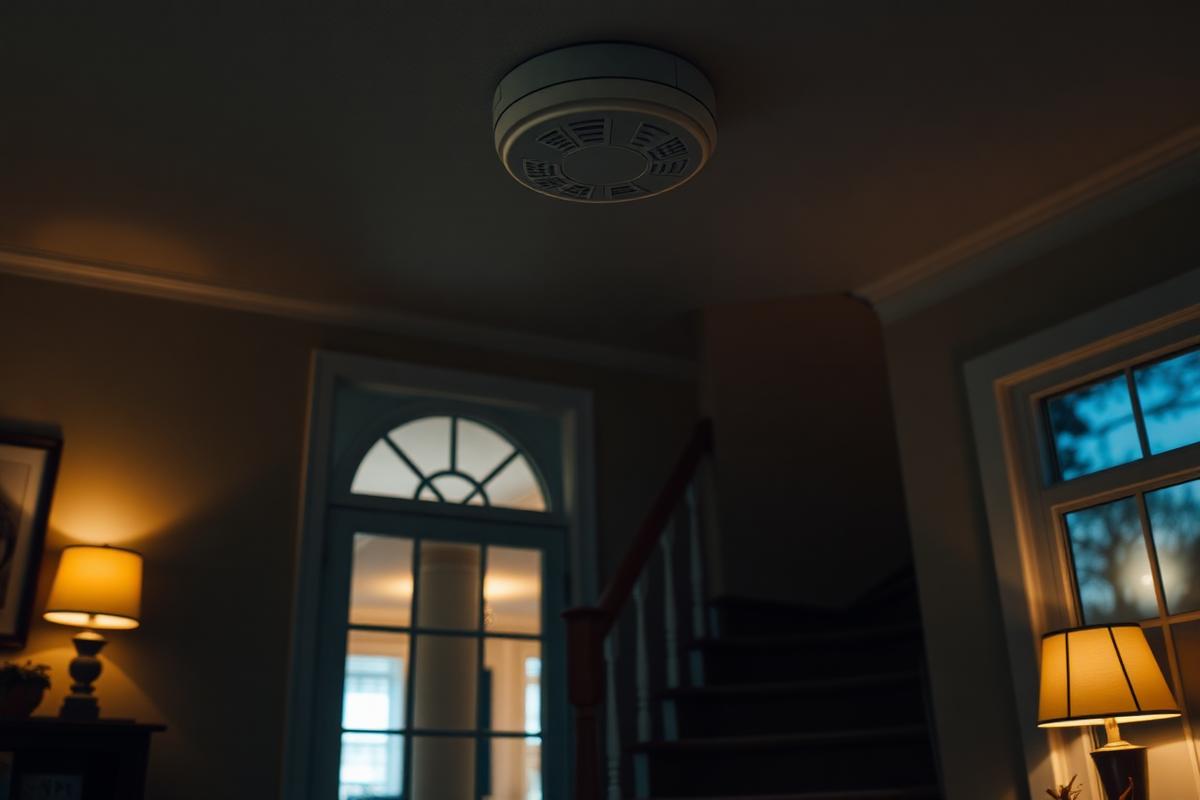
CHARLOTTE, NC – X-Sense highlights the growing need for whole-home protection as fire behavior in modern households becomes increasingly unpredictable.
Combination alarms provide two forms of household hazard detection in a single device, helping residents monitor both visible fire risks and invisible carbon monoxide exposure.
Smoke and carbon monoxide present very different dangers inside a home. Smoke may provide visible signs of a developing fire, while carbon monoxide is colorless and odorless. Because each hazard requires a different sensing method, households must ensure that their alarm systems are capable of detecting both.
A combination smoke and carbon monoxide alarm brings these two forms of detection into one unit. Rather than installing separate smoke and CO alarms in every suitable location, homeowners can use a two-in-one device designed to identify both conditions and issue an appropriate warning.
This approach can simplify household safety planning while reducing the number of individual devices that need to be installed, tested, and maintained.
Two Hazards Require Two Detection Technologies
Smoke alarms and carbon monoxide alarms do not perform the same function.
A smoke alarm is designed to detect particles created by a developing fire. Many residential alarms use photoelectric sensing technology, which responds when smoke particles enter a light-based sensing chamber.
A carbon monoxide alarm uses a separate sensor to monitor the air for rising CO concentrations. Electrochemical sensors are commonly used for this purpose because they are designed to react to the presence of carbon monoxide at specific levels.
A combined smoke and carbon monoxide detector contains both sensing technologies within one housing. The device can therefore monitor for smoke and carbon monoxide independently, even though the two hazards behave differently.
The practical benefit is broader detection from a single installation point. However, homeowners should still evaluate the size and layout of the property to determine how many alarms are required.
Combination Alarms Can Simplify Home Safety
Installing separate alarms can be effective, but it may lead to a larger number of devices throughout the home. Each unit has its own testing schedule, power source, replacement date, and alert patterns.
Combination alarms consolidate these responsibilities. Residents can test one device for both forms of detection and monitor a single battery or power supply. This may make routine maintenance easier, particularly in homes that require alarms across several floors and sleeping areas.
A two-in-one unit can also reduce confusion during installation. Instead of deciding whether a particular hallway or bedroom-adjacent location requires a smoke alarm, a CO alarm, or both, homeowners can use one appropriately approved combination device.
This does not mean every location is suitable for the same alarm. Installation should always follow the manufacturer’s instructions, applicable building requirements, and the environmental conditions of each room.
Interconnection Expands the Warning Area
An alarm can only provide useful warning when occupants can hear it. A device installed in a basement, distant hallway, or another floor may not be loud enough to wake everyone in the home.
Wireless interconnection helps address this problem. When one compatible alarm detects danger, it can transmit a signal that causes other connected alarms to sound. The alert is therefore extended beyond the room where the hazard first appears.
X-Sense SC07-W wireless interconnected smoke and CO alarm is an example of a combination device designed for this type of home network.
According to its technical specifications, the SC07-W uses a photoelectric sensor for smoke detection and an electrochemical sensor for carbon monoxide detection. Compatible X-Sense wireless alarms can be interconnected so that multiple units respond when one detects smoke or dangerous CO levels.
The product supports up to 18 compatible wireless units and has a stated transmission range of more than 820 feet, or 250 meters, in open-air conditions. Indoor range may vary because walls, floors, furniture, building materials, and electrical equipment can affect wireless communication.
The SC07-W operates through direct wireless interconnection. It is not designed for smart-app monitoring and is not compatible with the X-Sense SBS50 base station. It may therefore suit households that want alarms to communicate with one another without relying on a home Wi-Fi network or mobile application.
Long-Life Power Reduces Battery Changes
Battery maintenance is one of the most important parts of alarm ownership. An alarm with a missing, disconnected, or depleted battery cannot provide dependable protection.
The SC07-W uses two non-replaceable CR123A lithium batteries and has a stated battery life of 10 years. Its listed product lifespan is also 10 years from the date of manufacture.
A sealed battery reduces the need for routine battery replacement and prevents the power source from being removed for use in another device. However, a long-life battery does not mean the alarm can be ignored after installation.
Users should continue testing the device according to the manufacturer’s instructions. The complete unit should be replaced at the end of its specified lifespan or sooner if it becomes damaged, develops a fault, or fails a functional test.
Clear Warnings Support Faster Response
The SC07-W produces an alarm level of at least 85 decibels when measured from 10 feet away. During routine testing, homeowners should confirm that its warning can be heard from bedrooms, living areas, and other occupied spaces.
Household members should also understand the alarm’s different signals. Smoke, carbon monoxide, low-battery, fault, and end-of-life alerts may use different beep patterns or indicator-light sequences.
The user manual should be kept accessible so residents can identify what each warning means. Learning these patterns before an emergency can reduce hesitation and confusion when an alarm activates.
Placement and Testing Remain Essential
Combination alarms should be installed only in approved locations. Airflow, room layout, temperature, humidity, and distance from cooking appliances can all affect alarm performance.
Devices should not be covered by furniture, curtains, decorations, or other objects that may prevent smoke or carbon monoxide from reaching the sensors. They should also remain clean and free from dust or debris.
When interconnected alarms are used, testing should verify both the individual unit and the wider network. A successful network test confirms that the connected alarms can communicate and sound together.
Building a More Complete Safety Plan
Combination alarms can simplify detection, but they remain one part of a broader home-safety strategy. Families should also maintain fuel-burning appliances, develop an evacuation plan, identify an outdoor meeting point, and ensure that everyone understands how to respond to smoke or CO warnings.
By combining two sensing technologies with wireless interconnection and long-life power, modern combination alarms can provide a more coordinated layer of household protection. Their value depends on correct placement, routine testing, timely replacement, and a clear emergency response plan.


