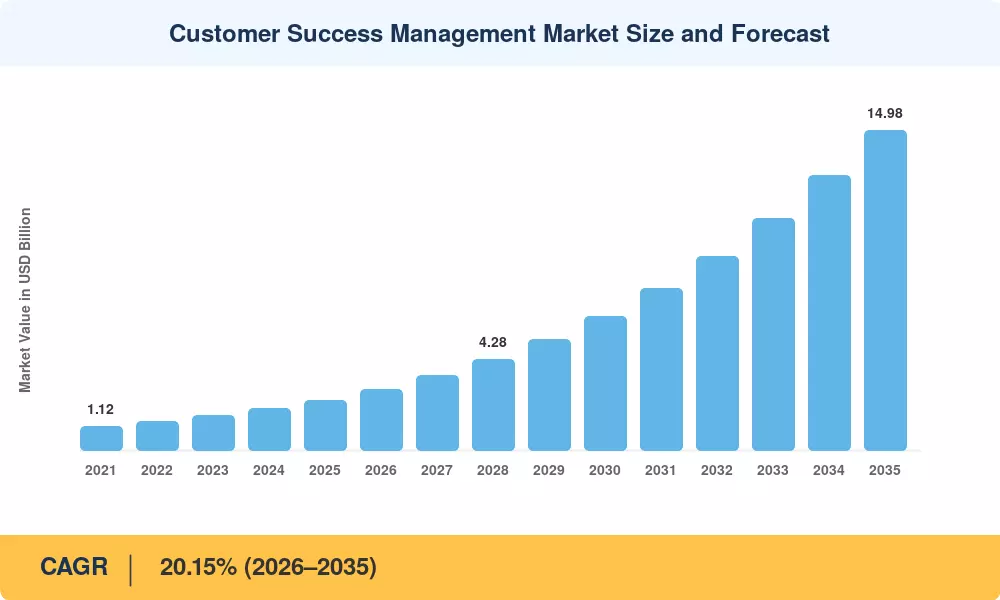
Customer Success Management Market grows rapidly as businesses prioritize customer retention, engagement, loyalty, and long-term value.
NEW YORK(NY), NY, UNITED STATES, September 4, 2026 /EINPresswire.com/ — The Customer Success Management Market is gaining momentum as businesses increasingly focus on retaining customers, improving engagement, and maximizing lifetime value. Customer success platforms help organizations monitor customer health, identify risks, automate engagement, and coordinate proactive support. The growing adoption of subscription-based business models is also encouraging companies to invest in structured customer success strategies.
Customer success management has evolved beyond traditional customer support by emphasizing long-term relationships and measurable business outcomes. Organizations use dedicated platforms to track product adoption, customer sentiment, renewal likelihood, and engagement levels. These capabilities allow customer success teams to identify opportunities earlier and create personalized experiences that strengthen loyalty and reduce churn.
The increasing availability of customer data is further transforming customer success operations. Businesses can combine information from CRM systems, support applications, product analytics, billing platforms, and communication channels to develop comprehensive customer profiles. This unified view enables teams to understand customer requirements more effectively and deliver timely interventions throughout the customer lifecycle.
Get An Exclusive Sample of the Research Report at –
https://www.marketresearchfuture.com/sample_request/23834
Market Size and Growth Outlook
The customer success management market was valued at USD 2.35 billion in 2025 and is projected to open the forecast window at USD 2.87 billion in 2026, climbing to USD 14.98 billion by 2035 at a 20.15% CAGR. This strong expansion reflects growing enterprise investment in technologies designed to improve retention, customer engagement, product adoption, and recurring revenue performance.
The rapid growth of software-as-a-service business models is a major contributor to market expansion. Subscription businesses must continuously demonstrate value to retain customers and secure renewals. Customer success platforms provide organizations with analytics and automation capabilities that help identify customers requiring additional support, education, onboarding, or engagement.
Artificial Intelligence in Customer Success
Artificial intelligence is becoming one of the most influential technologies shaping customer success management. AI-powered platforms can analyze customer interactions, identify behavioral patterns, predict churn, generate recommendations, and prioritize accounts requiring immediate attention. These capabilities allow customer success professionals to focus on strategic relationship management rather than repetitive administrative tasks.
Generative AI is also creating new possibilities for customer success teams. AI assistants can summarize customer histories, prepare meeting briefs, generate personalized communications, and recommend next-best actions. Predictive analytics can further identify customers who may be at risk of disengagement. As AI capabilities mature, intelligent automation is expected to become increasingly integrated into customer success workflows.
Growing Importance of Customer Retention
Customer retention has become a strategic priority because acquiring new customers can require substantial marketing, sales, and onboarding investments. Businesses therefore increasingly seek technologies that help them understand customer needs and prevent avoidable churn. Customer success management platforms provide visibility into customer health and allow organizations to intervene before dissatisfaction becomes severe.
Retention-focused strategies are particularly important for subscription-based companies. Regular monitoring of usage, engagement, support activity, and renewal indicators enables customer success teams to identify potential problems early. By delivering targeted training, personalized recommendations, and proactive assistance, businesses can strengthen customer relationships while increasing opportunities for renewals and expansion.
Customer Health Scoring and Predictive Analytics
Customer health scoring is a central capability of modern customer success platforms. Organizations can combine product usage, customer feedback, support tickets, payment behavior, engagement levels, and other indicators to determine the overall health of an account. Automated scoring helps teams prioritize resources and identify accounts requiring additional attention.
Predictive analytics adds another layer of intelligence by estimating future customer behavior. Platforms can detect patterns associated with churn, expansion, renewal, or declining engagement. These insights enable customer success managers to develop proactive strategies instead of relying solely on historical reports. The shift toward predictive customer management is expected to support continued adoption across enterprise and mid-sized organizations.
Customer Success Automation
Automation is helping businesses scale customer success programs without proportionally increasing operational costs. Automated onboarding workflows, email campaigns, product education, health-score alerts, renewal reminders, and customer surveys can reduce manual workloads while maintaining consistent engagement.
Automation is particularly valuable for organizations managing large customer portfolios. Instead of relying entirely on one-to-one interactions, customer success teams can use automated journeys for routine activities while reserving human intervention for complex or high-value accounts. This combination of automation and human expertise can improve operational efficiency while maintaining meaningful customer relationships.
Buy this Premium Research Report at –
https://www.marketresearchfuture.com/checkout?currency=one_user-USD&report_id=23834
Regional Market Share Analysis
North America accounted for approximately 41.7% of the global Customer Success Management Market in 2025, making it the leading regional contributor. The region benefits from strong enterprise software adoption, mature SaaS ecosystems, and significant investment in AI-driven business technologies. Agentic AI, warehouse-native architecture, and convergence between revenue operations and customer success are important investment themes.
Europe represented approximately 25.8% of the global market in 2025, supported by increasing attention to responsible AI, data governance, privacy, and regulatory compliance. AI Act compliance, data residency, and sovereign cloud capabilities are prominent investment themes. Organizations are increasingly evaluating customer success platforms based on their ability to manage customer information securely while meeting evolving regional requirements.
Asia-Pacific captured around 22.6% of the global market in 2025 and is emerging as an important growth region. Expanding digital adoption, growing SaaS penetration, and increasing technology investment among small and medium-sized businesses are supporting demand. SME digitalization, localization, and mobile-first customer engagement are among the key themes influencing regional adoption.
South America held an estimated 5.2% share in 2025, with demand supported by expanding digital services and fintech adoption. Customer success platforms designed for Portuguese- and Spanish-speaking customers can help businesses address local communication preferences and improve engagement. Increasing SaaS adoption is expected to create additional opportunities across the region.
The Middle East and Africa accounted for approximately 4.7% of the global market in 2025. National digitalization programs and investments in modern cloud infrastructure are creating opportunities for customer success technology. Sovereign cloud capabilities, data governance, and localized digital services are expected to remain important considerations as organizations expand their technology ecosystems.
SaaS Adoption Driving Market Expansion
The continued growth of SaaS applications is closely connected with customer success management adoption. SaaS providers depend heavily on recurring revenue, making customer retention and product adoption essential to financial performance. Customer success platforms help providers monitor usage and engagement while creating structured processes for onboarding, adoption, renewal, and expansion.
Beyond software companies, industries such as financial services, healthcare, telecommunications, education, professional services, and retail are adopting customer success approaches. Any organization that depends on long-term customer relationships can benefit from centralized customer intelligence and proactive engagement. This broadening application base is helping expand the addressable opportunity for customer success management solutions.
Market Segmentation
The Customer Success Management Market can be examined by component, deployment model, organization size, and industry vertical. Solutions typically include software platforms and professional services, while deployment options can include cloud-based and on-premises environments. Cloud deployment is particularly attractive because it supports scalability, remote access, rapid implementation, and integration with other enterprise applications.
By organization size, large enterprises often require sophisticated customer intelligence, integration, analytics, and automation capabilities. Small and medium-sized businesses are increasingly adopting streamlined platforms that provide essential customer health monitoring and engagement functionality. Vendors are responding with flexible pricing structures and modular solutions designed to meet the requirements of organizations at different stages of maturity.
Integration with CRM and Business Applications
Integration is becoming essential for customer success platforms because customer information is typically distributed across multiple enterprise systems. Connecting customer success software with CRM, marketing automation, support, billing, product analytics, and communication platforms provides a more complete view of customer activity.
These integrations allow organizations to create connected workflows across sales, marketing, service, and customer success teams. When information is shared across departments, businesses can reduce data silos and coordinate customer engagement more effectively. Improved integration capabilities are therefore becoming an important factor when organizations evaluate customer success technology.
Key Market Opportunities
One of the strongest opportunities lies in AI-powered customer success. Vendors can differentiate their platforms by providing predictive churn detection, intelligent recommendations, automated account summaries, and agentic workflows. These capabilities can help customer success teams manage larger portfolios while improving the relevance and timing of customer interactions.
Another opportunity comes from customer expansion and revenue optimization. Customer success platforms can identify customers who may benefit from additional products, higher service tiers, or complementary solutions. By connecting customer health data with revenue operations, businesses can transform customer success from a retention-focused function into a broader contributor to sustainable revenue growth.
Challenges and Restraints
Despite strong growth prospects, organizations can face challenges when implementing customer success management platforms. Data quality, fragmented systems, integration complexity, employee adoption, and concerns regarding customer information can slow implementation. Companies must establish clear data governance and processes before they can fully benefit from advanced analytics and automation.
Another challenge is balancing automation with human interaction. Excessive automation can make customer communications feel impersonal, particularly for strategic accounts requiring customized attention. Successful organizations are therefore likely to use AI and automation to support customer success professionals rather than completely replace relationship-driven engagement.
Emerging Trends
Agentic AI is emerging as a significant trend because intelligent systems can potentially execute multi-step customer success workflows with limited manual intervention. Instead of simply generating recommendations, AI agents can monitor customer signals, initiate appropriate workflows, prepare communications, and escalate issues when human involvement is necessary.
Revenue operations convergence is another important trend. Customer success teams are increasingly collaborating with sales, marketing, and revenue operations to create unified customer lifecycle strategies. This convergence can improve visibility into customer value, renewal opportunities, expansion potential, and overall account performance.
Future Outlook
The future of the Customer Success Management Market is expected to be shaped by AI, predictive analytics, automation, integrated customer data, and increasingly personalized engagement. Businesses will continue moving from reactive customer support toward proactive and outcome-oriented relationship management.
As customer expectations become more sophisticated, companies will require technologies capable of understanding customer behavior and delivering timely interventions. Platforms that combine AI-driven intelligence with strong integrations, intuitive workflows, security, and actionable analytics are likely to remain well positioned. The market’s projected growth toward USD 14.98 billion by 2035 reflects the increasing strategic importance of customer success in recurring-revenue and customer-centric business models.
Browse Full Report Details –
https://www.marketresearchfuture.com/reports/customer-success-management-market-23834
Key Takeaways
The Customer Success Management Market is experiencing strong expansion as businesses prioritize retention, customer lifetime value, product adoption, and recurring revenue. AI, automation, predictive analytics, customer health scoring, and CRM integration are transforming how organizations manage customer relationships.
North America currently represents the largest regional share, while Europe, Asia-Pacific, South America, and the Middle East and Africa offer additional growth opportunities. The increasing use of SaaS, agentic AI, and data-driven engagement is expected to make customer success management an increasingly important component of modern enterprise strategy.
Frequently Asked Questions
What is the Customer Success Management Market?
It covers software and services that help businesses improve customer retention, engagement, adoption, satisfaction, and long-term value.
What was the market size in 2025?
The market was valued at approximately USD 2.35 billion in 2025 based on the figures provided.
What is the projected size by 2035?
The market is projected to reach approximately USD 14.98 billion by 2035, growing at a 20.15% CAGR.
Which region held the largest share in 2025?
North America led with an estimated 41.7% share of the global market in 2025.
How is AI changing customer success?
AI supports predictive churn detection, customer health analysis, automated engagement, account summaries, and next-best-action recommendations.
Why is customer retention important?
Retention protects recurring revenue and helps businesses maximize the long-term value of existing customers.
What is customer health scoring?
Customer health scoring combines behavioral and operational signals to estimate the strength and risk level of a customer relationship.
What are the major market trends?
AI automation, agentic AI, predictive analytics, SaaS adoption, RevOps convergence, and personalized customer engagement are major trends.
➤➤ Exclusive Research Publications by Market Research Future:
Machine Vision Market-
https://www.marketresearchfuture.com/reports/machine-vision-market-1510
Artificial Neural Network Market-
https://www.marketresearchfuture.com/reports/artificial-neural-network-market-6287
Ai In Transportation Market-
https://www.marketresearchfuture.com/reports/ai-in-transportation-market-6673
Customer Communication Management Software Market-
https://www.marketresearchfuture.com/reports/customer-communication-management-software-market-8807
System Of Insight Market-
https://www.marketresearchfuture.com/reports/system-insight-market-10095
Antivirus Software Market-
https://www.marketresearchfuture.com/reports/antivirus-software-market-10301
Web Scraper Software Market-
https://www.marketresearchfuture.com/reports/web-scraper-software-market-10347
Mobile Apps And Web Analytics Market-
https://www.marketresearchfuture.com/reports/mobile-apps-web-analytics-market-10378
Telecom Billing & Revenue Management Market-
https://www.marketresearchfuture.com/reports/telecom-billing-revenue-management-market-10448
Advanced Persistent Threat Protection Market-
https://www.marketresearchfuture.com/reports/advanced-persistent-threat-protection-market-10471
5G Base Station Market-
https://www.marketresearchfuture.com/reports/5g-base-station-market-10523
5G Infrastructure Market-
https://www.marketresearchfuture.com/reports/5g-infrastructure-market-10527
Market Research Future
Market Research Future
+1 855-661-4441
email us here
Legal Disclaimer:
EIN Presswire provides this news content “as is” without warranty of any kind. We do not accept any responsibility or liability
for the accuracy, content, images, videos, licenses, completeness, legality, or reliability of the information contained in this
article. If you have any complaints or copyright issues related to this article, kindly contact the author above.

Media gallery