
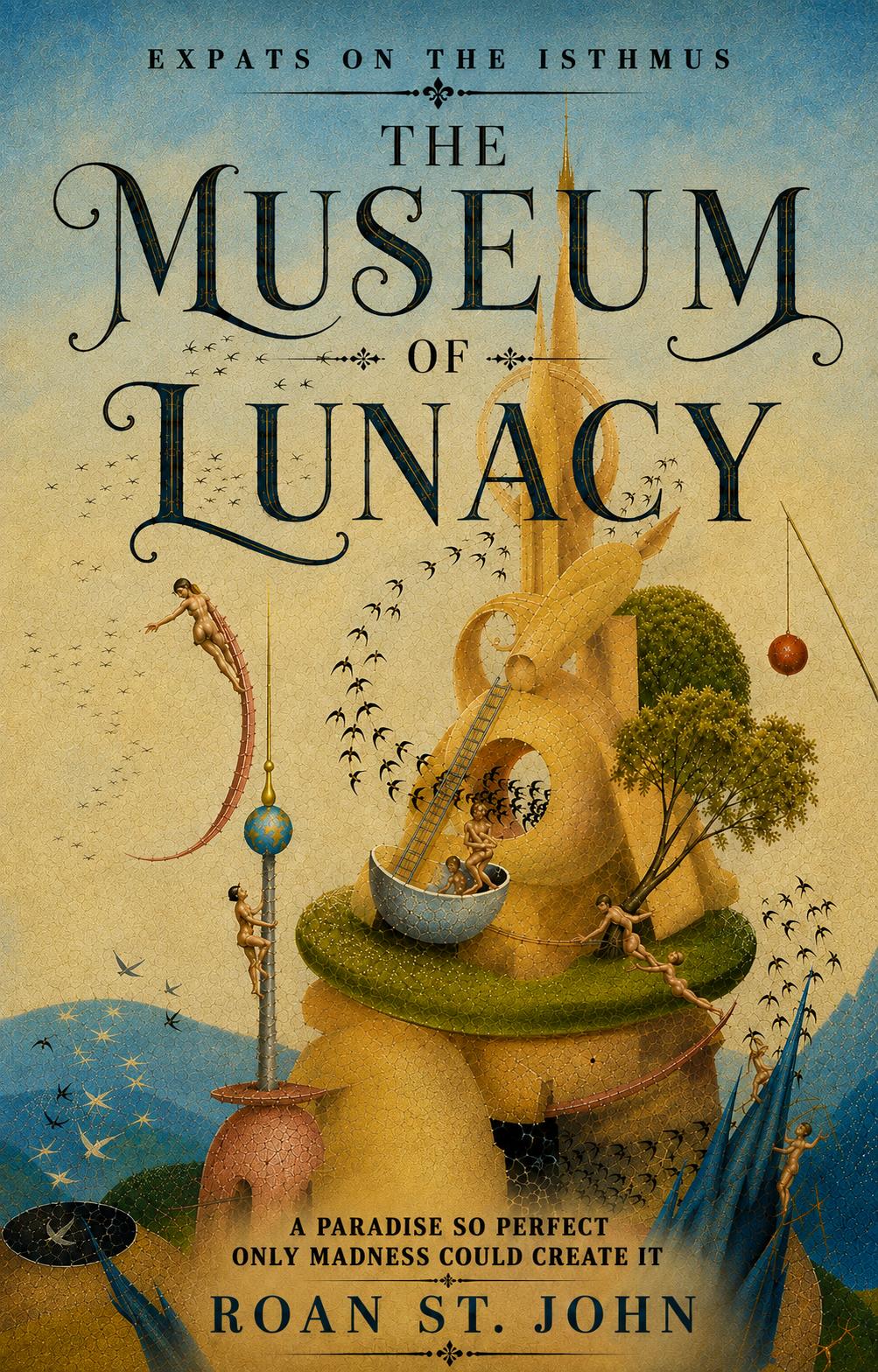
Evergreen, Colorado Sep 23, 2026 (Issuewire.com) Paradise has become fertile territory for contemporary storytelling.
HBOs The White Lotus uses idyllic destinations as settings for social satire and the darker behavior beneath privileged travel. Prime Videos Expats, starring Nicole Kidman, explores intersecting lives within Hong Kongs expatriate community. Chris Pavones bestselling thriller The Expats sends an American family to Luxembourg, where expatriate reinvention collides with espionage and deception.
Roan St. Johns six-book Expats on the Isthmus series occupies some of the same seductive territorybut its paradise is an entire country.
Welcome to Malpaís, the fictional Central American nation promoted as the last undiscovered paradise, where outsiders arrive expecting to reinvent themselves and discover that paradise has rules they rarely understand.
At the center is journalist Maya Warwick, surrounded by an extraordinary expatriate ecosystem of romantics, con artists, spies, fugitives, crooked officials, cartel operatives, fraudulent art dealers, and perfectly reasonable people who make catastrophically unreasonable decisions.
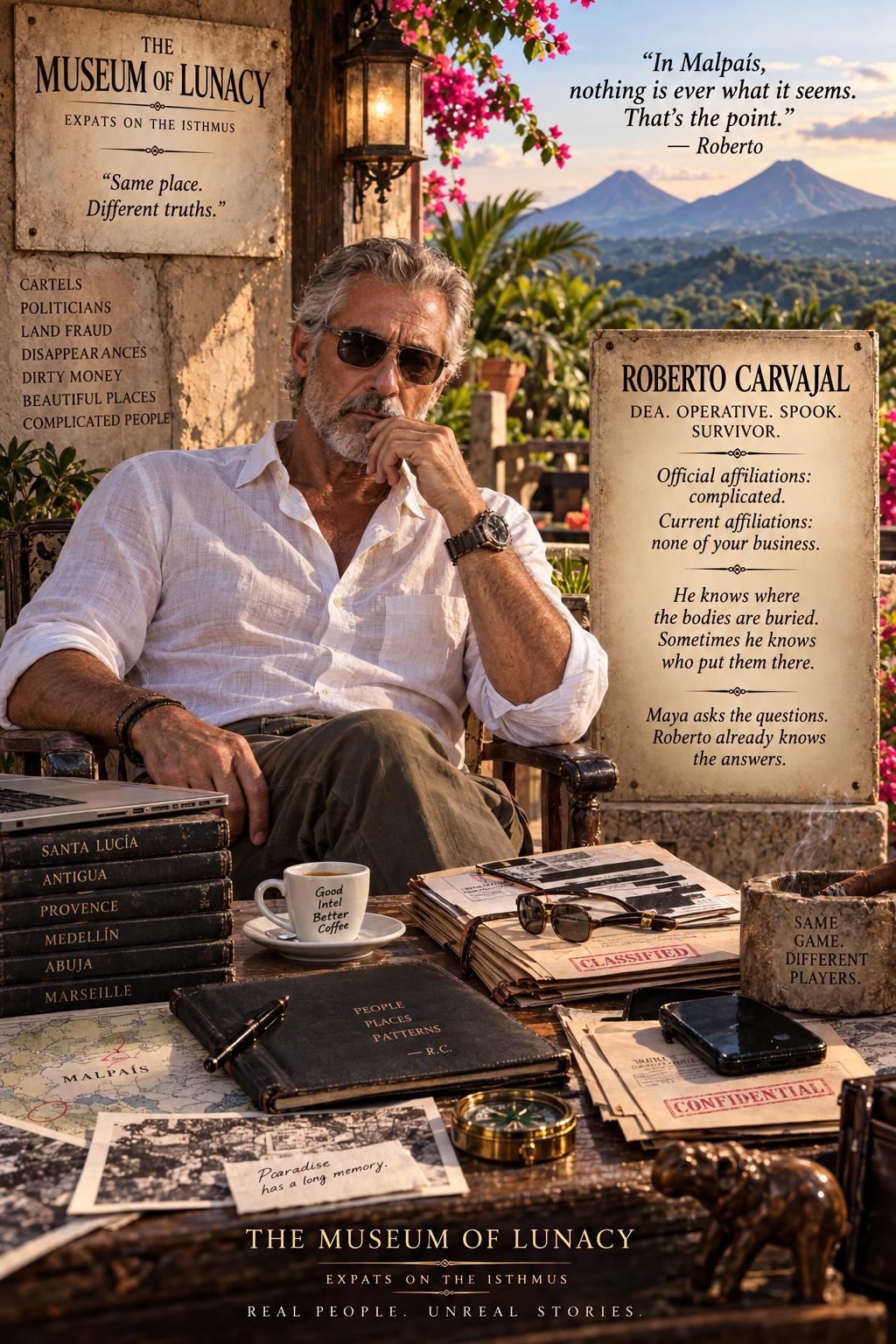
Alongside her is Roberto Carvajal, former DEA operative and enigmatic intelligence figure who generally knows considerably more than he is willing to explain.
Together, Maya and Roberto provide continuity through a world capable of moving from black comedy to crime thriller, espionage, romance and social satiresometimes within the same story.
The Museum Was There All Along
The newly released sixth novel, The Museum of Lunacy, brings into focus something that developed organically across the previous books: Expats on the Isthmus had become more than a sequence of novels.
It had become a universe.
St. John began the series without character charts, detailed outlines or predetermined story arcs. Characters appeared, vanished and resurfaced. Incidents that seemed unrelated began forming patterns. Even the phrase Museum of Lunacy appeared several books before becoming the title and organizing idea of the final novel.
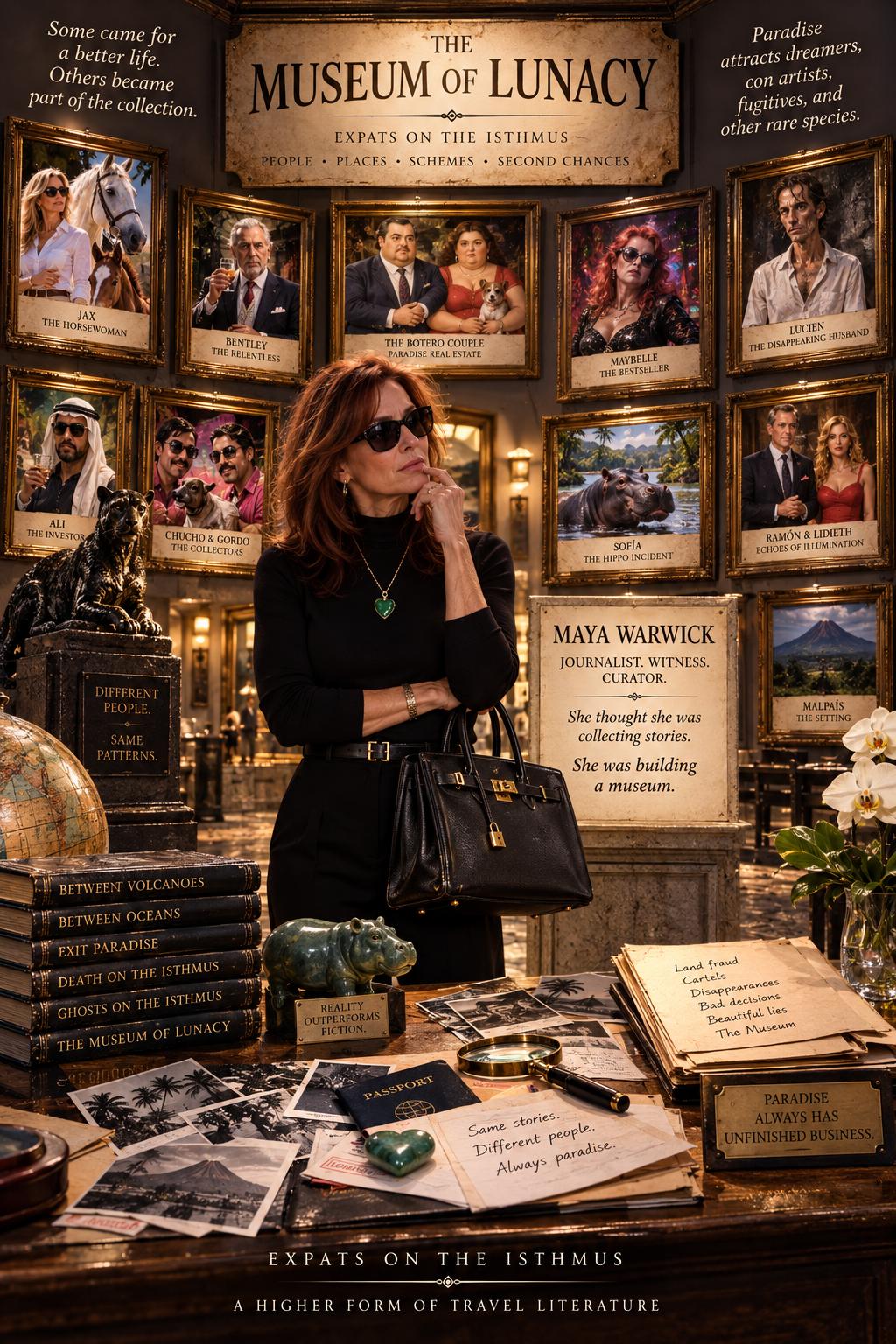
In The Museum of Lunacy, Maya finally recognizes what has been accumulating around her.
She thought she was collecting stories. She was building a museum.
Among its inhabitants is Jax Wakefield, glamorous horsewoman and romantic true believer, who introduces herself to Maya with a warning:
Dont believe anything you hear about me. Im actually much worse.
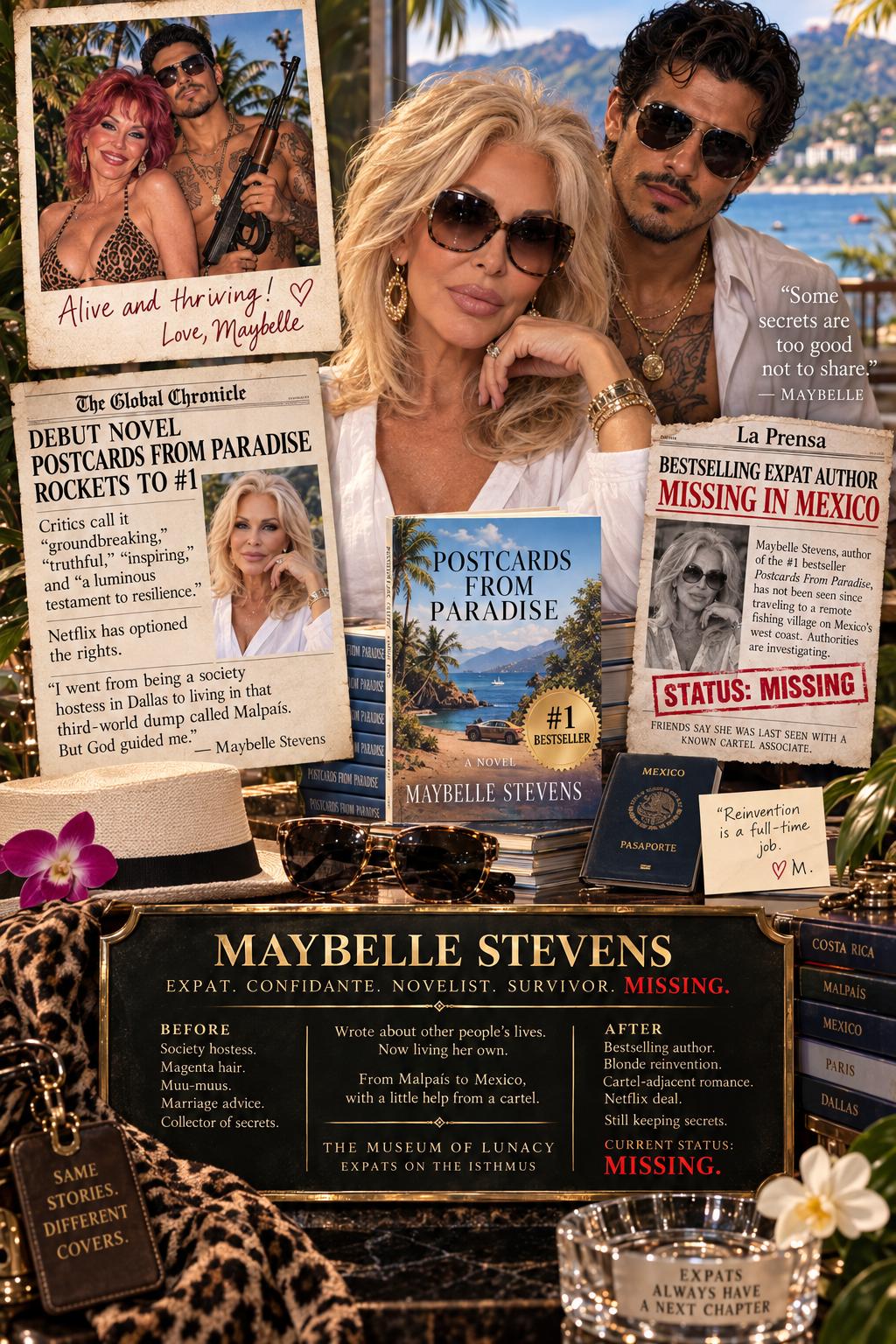
Then there is Maybelle Stevens, once the unofficial archivist of everybody elses secrets, who reinvents herself as a bestselling author with cartel connectionsbefore eventually becoming the subject of another headline:
BESTSELLING EXPAT AUTHOR MISSING IN MEXICO.
They are part of a much larger recurring population whose stories turn Malpaís into something unusual in expatriate fiction: not merely a setting, but an ecosystem.
Bringing the Museum to Life
That realization has now inspired The Portrait Gallery of the Museum of Lunacy, a visual collection presenting the series characters as individual museum exhibits.
The portraits combine cinematic imagery with artifacts, background clues, and lines drawn from the novels. Maya stands inside the Museum surrounded by the collection she unknowingly assembled. Roberto sits amid classified dossiers, maps, and redacted affiliations. Jax appears with her beloved horsesand evidence that not everything went according to plan. Maybelles portrait traces her journey from expatriate confidante to glamorous author, cartel companion, and missing person.
Together, they reveal what six novels gradually created: a country, a population, and a mythology.
And that is where Expats on the Isthmus differs from many stories about paradise.
In this series, Malpaís itself is the continuing character.
People arrive. People leave. Some disappear. Others return when they know perfectly well they shouldnt.
Maya and Roberto remain the connective tissue, while Malpaís continually supplies new characters, mysteries, crimes, romances, scams and absurditiesan ensemble structure that naturally lends itself to episodic storytelling.
Beneath the humor runs the question at the heart of The Museum of Lunacy:
What if the greatest crime wasnt committed by a personbut by a system?
After six books, St. John has created something she never consciously set out to build.
A country. A population. A mythology. And a museum large enough to contain them all.
Paradise always has unfinished business.
About Roan St. John
A native of Colorado, Roan St. John is the author of the six-volume Expats on the Isthmus series. Drawing on years spent living among expatriate communities in Central America and Europe, her fiction combines crime, satire, intrigue, and the peculiar psychology of people who travel elsewhere hoping to become someone else.
The Museum of Lunacy, the sixth book in the series, was released in September 2026.

Media Contact
Roan St. John, author
Source :Roan St. John, author
This article was originally published by IssueWire. Read the original article here.


